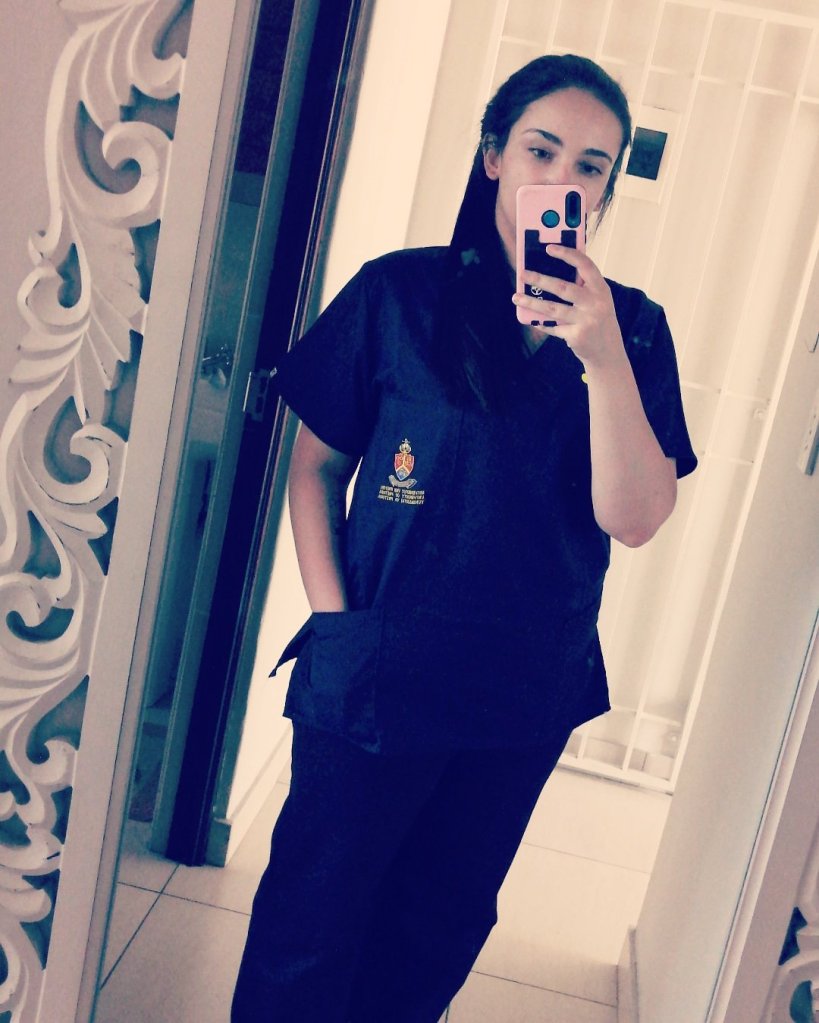
Third year: a lesson in confidence and humility

This post was hard to write for several reasons, one being that practically this entire year was a blur and honestly I don’t remember as much of it as I would like to. And two: I’ve always had trouble sharing anything more than the practical. But I’m going to try nonetheless

For me third year was a lesson in both confidence and humility. I’m going to try and address both while talking about the layout of third year? But block 9 at the very least

So third year starts off with block 6 : Cardiology, block 7 : pulmonology and then block 8 which is basically surgery. I’d like to talk about these individually , but I honestly don’t think I remember enough about the layout and tests to be very helpful at all. All I remember is that I found block 8 the most difficult in my journey this far … and I will leave it at that

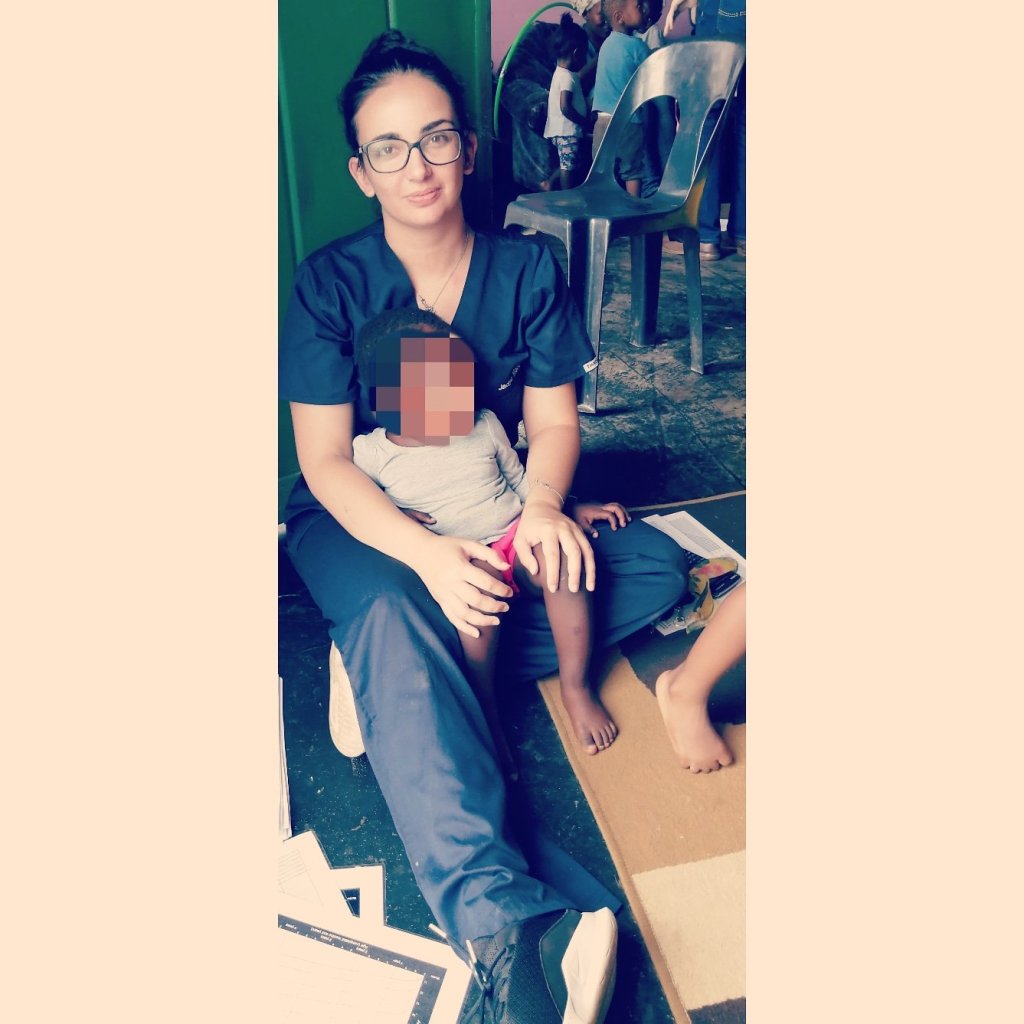
Then in July came our first clinical block in medicine, obstetrics and neonatology. I don’t know if it was the teaching ( the head of block and all the lecturers were nothing short of incredible ) , the first clinical exposure, the patients?, my rotation group… thinking back it is probably a combination of all these… but I LOVED this block. Now that’s not to say that it wasn’t challenging , it gave surgery a run for it’s money for sure. But I learned more than I thought was possible in the space of 10 weeks.

I’ve always been the kind to sort of fade into the crowd a little bit, I have struggled with confidence and anxiety for quite a while. But this block and probably the rest of medicine required better from me. For the first time ever I had to be confident and assertive to learn as much as I could from each patient, each opportunity to perform a skill i had this far only ever seen on video or done in practice. My colleagues? Fellow students? challenged me to speak up , to go first sometimes . We cheered on each other’s first blood draws, injections, IV lines.

And I think this was my big profound takeaway from this block … or atleast half of it.

The other half is the humility part. Awe and wander at the complexities of the human body… At what a woman’s body can withstand and adapt to and at the tiny complex little beings they bring into this world. And then humility at how much time and dedication the doctors put into trying to master these complexities , the amount of priceless knowledge and experience they have and how eager they are to share it.

So that’s it… for now

I still feel incredibly blessed to be on this journey and Instead of counting down the days, months, years until the end (especially when I’m tired), I’m still trying to actively take in each and every day

SA4: Second year anatomy


I’ve been putting off this post for a while, just because I am not sure how one would start a post about an academic year during a pandemic. Nevertheless, here I am.

Hi everyone, 😊 I hope if you’re reading this that you’re well and safe and that you’ve survived this year as unscathed as possible. I recently completed my 2nd year and for the past few months things have been a little disorganized and chaotic. But I am going to try give you an idea of each block in the order we were supposed to do them pre-COVID-19. I think that this will take more than one blog post to cover but we will see how it goes.

SA 4

If you’re a medical student at tuks, you’ve probably heard it…the stories, the fear around anatomy and dissection or SA4. I don’t know if we had an entirely different experience, if I had an entirely different experience but anatomy was one of the very few enjoyable blocks this year for me. So, anatomy is broken down into the 7 different regions.

1.       Thorax

2.       Head and neck

3.       Neuroanatomy

4.       Upper limb

5.       Abdomen

6.       Pelvis

7.       Lower limb  

I can’t remember how long exactly each region was meant to be covered for as our schedule changed quite a bit, but basically there would be morning and afternoon dissections and depending on the group you’re allocated to you would then attend one of these. They work hard to make sure that the timetable allows each group to have both equal number of hours dissecting and equal afternoon and morning dissections. In between dissections you would then attend your contact lectures.  There are 7 MCQ tests, 1 on each region, 2 interim tests which consist of a written test and a spot test and then finally a block test also consisting of a written test and a spot test. You are also required to submit a portfolio on your cadaver at the end of SA4 where you write about any anomalies you found in your cadaver while dissecting.  So back to my “anatomy was enjoyable” point, As you can see above there is A LOT to cover in very little time and you are definitely going to be very busy and very tired sometimes BUT the anatomy department at the university of Pretoria are amazing. They want you to succeed and do everything in their power to accommodate and help you. At the get go you are provided with more resources and tools than you will have time for to make sure you succeed In SA4 and besides the long hours… what an honour and privilege to be able to dissect and learn from a cadaver. Lastly, I had the idea to provide you with a few tips on getting through anatomy

The theory- Anatomy, although given the short period of time you will have for this block, is not a race but rather a marathon. Stay up to date in your revision of the work, prepare for daily lectures by reading through the material, attend the lecture and then revise the material again in the evening every.single.day. Don’t try to cram anatomy before tests it doesn’t work …it isn’t difficult work but it’s probably much more than you’re used to at this point…work consistently.

Also attend the tutorials, the tutors have all been through SA4 and regularly check in with the lecturers so they have very useful pointers, tips, study techniques AND it’s another opportunity for you to revise the day’s work. Lastly if you’re struggling, don’t be afraid to reach out to the students who have been through it, they are more often than not super keen on helping out.

Dissection– Choose a good dissection group! SA4 is hard work but you want to also be able to enjoy this opportunity. You are going to spend A LOT of time around these people so make it easy for yourself.

The Tuks surgical society hosts an incredibly good pre-anatomy workshop for second years just before anatomy commences in 2nd year, attend this to get an idea of how to use your dissection kit and how to dissect.

Most importantly prepare for dissections every day, there is nothing worse than dissecting and having no clue what is going on. That being said, the first day you will probably be lost most of the time… and its fiiiine! Be gracious with yourself, you will adapt.

Spot tests: McMinn’s and primal pictures are your friends!

Don’t forget to revise osteology from first year, they do ask it.

There is also an app available on IOS called Complete Anatomy. There is a yearly fee but it is so worth it and helps a bunch when it comes to visualising certain things.

I think that’s where I am going to leave it for now. In my next post I will hopefully be able to cover a few more blocks. Please feel free to message me if you have any questions.

Block 3 and the start of second year

So in light of the recent happenings with Covid-19, our contact classes have been cancelled for the next three weeks or so. I thought I’d use this time to update my blog on block 3 as well as our skills block that we completed at the end of Feb.

Block 3 was all about homeostasis and we had a whole mixture of lectures from the the list of the following sub disciplines (for lack of a better word)

1. Endocrinology

2. Neurophysiology.

3. Nutrition

4. Pharmacology

5. Clinical Haematology

6. Intermediary Metabolism

7. Chemical pathology

8. Immunology

9. Histology

10. Gross Anatomy

11. Paediatrics

12. Physiology

As you can probably tell by the list block 3 was A LOT of information about a range of different topics. So I found it really difficult to link the work and then to study in a way that cemented it in my long term memory rather than parrot it back for a mcq test and then forget it. It also wasn’t work that I particularly enjoyed and leaned more to the scientific side of physiology than anything clinically based.

The block was 8 weeks long. And during the duration of the block we wrote a test every 2 or so weeks, which allowed us 3 of these tests. And then one big block test at the end of the 8 weeks which was equivalent to an exam. All the questions in block 3 are computer based multiple choice questions and I struggled with that as well. I almost feel that it allows the most random detail to be tested and I don’t really see how your general understanding or any kind of understanding of a topic can be tested this way. There is obviously research that proves CBT tests work however, so maybe it’s just one of those things you have to put your head down and get through

Concurrently running with block 3 we also had a general skills and procedure module. Where we would go into skills lab and practice our first 3 clinical skills. This being IV infusion, venepuncture and intramuscular injection. We also had our first OSCE which is basically an exam testing our clinical skills. We were given a checklist and had to perform one of the three procedures for the examiner according to the checklist. In this checklist there were critical errors that if we did incorrectly would mean we essentially failed the osce and would need to do another exam in June. These errors were basically focused on keeping things sterile and ensuring we learn to double and triple check the patient’s identity before a procedure is performed.

In my OSCE exam I was randomly chosen to perform venepuncture and had to verbalize to the examiner that it was required to keep the needle stable but I was so nervous and shaking so badly that I could not at the time. I did pass the first OSCE though and so no exam for me

All in all, I finished off block 3 with a distinction and managed to plan my work so that I covered everything but I did have to deal with a drop in my marks. I think going into second year (you often hear not to) but I underestimated the work load and the difficulty of the work. If you are going into your second year of Medicine at tuks and you are reading this, my advice to you would be, to be consistent in your self study but also to be forgiving of yourself. Medicine is hard.

I am.. Or was.. In the middle of my anatomy and dissection block and I can’t wait to report back on that once we get to finish it. I really enjoy anatomy and I have a ton of tips and advice to get you through.

Thank you so much for reading this, and please let me know if you have any questions, or anything you as a reader would like me to write on.

Block 1

I’m writing this still waiting to hear the results of my block test, but I figured it would be the perfect time to explain “promotion” which (as far as I know) is unique to UP’s medical school as well as a breakdown on the structure of block 1 for those who are interested.

Block 1 in the MBChB curriculum at UP is called “Molecule to organism” and the 8-week block is broken down into three sections or “subjects”. Each subject had several different topics presented during its few weeks. I think for organisation sake I will discuss each subject and its topics in their own paragraphs.

We started off in week 1 with the subject “Molecule to cell”, this was a 2 week subject within our 8 week block and in this week we had lectures presented under the topics Physiology and Genetics. In Physiology we dealt with macromolecules and their metabolism as well as the physiology of the nervous system such as how our neurons communicate and a bit of its functional organisation- which part of our central and peripheral nervous systems are responsible for certain functions. The genetics “topic” dealt with introduction to cytogenetics and single gene modifications. The Monday morning following each week we would write a week test on the previous week’s work and then at the end of the subject (so in this case the 2 weeks) we would write a “subject test” on the entirety of that subject’s work. The tests were all computer based with the weeks test having one long written (or in this case typed) question each and then the subject test would have 2 or 3 of these. This in addition to 20 or 30 multiple choice questions

Week 3-6 was a four-week section under the subject “cell to tissue”. This section of the block was by far the most jam packed as we also had 2 clinic visits which l will hopefully get to post about soon. The topics under cell too tissue were

1) Histology: we had both histology lectures and then a practical once a week where we used an online system to practice looking at and identifying slides that to be honest look mostly like nothing. I was so shocked to find they don’t have labels and aren’t really colour coded according to structure irl. Everything is just pink or blue and blobby.

The subtopics covered in histology were epithelium, supporting tissue, cartilage, bone, blood and contractile tissue as well as case studies on each like Marfan’s syndrome, osteoporosis, Duchenne’s muscular dystrophy etc.

2) Embryology: this was by far the hardest for me to grasp but the one I think I enjoyed the most. Embryology took us from the male and female reproductive systems through fertilization, to the formation of the embryo and fetus, this included folding and organogenesis… Which is nothing short of incredible and incredibly hard to wrap your head around too. Take home from Embryology in block 1, we are truly fearfully and wonderfully made.

3) Osteology: unlike the other topics, osteology wasn’t really sectioned into part of the three subjects and didn’t form part of our week or subject tests as it had its own dedicated subject test. In osteology we studied all the bones of the body and some relevant ligaments, starting from the skull, to the thorax and spine, to the pelvis and upper and lower limbs. Next year we do our big anatomy dissection block which if you speak to any med student at UP is one of the biggest challenges, workload and academic wise of the entire six years, so I was grateful for the relatively slow introduction to anatomy.

4) Genetics: genetics again spanned the entire block but in cell to tissue we had lectures presented under the subtopics: DNA diagnosis, polygenic and multifactorial inheritance, population genetics and to tie in with embryology: embryological development and dysmorphology.

5) Immunology: from about the 3rd week of this subject we were introduced to immunology and the bodies defence mechanisms: humoral and cell mediated immunity, we were also taught about the vaccination schedule for babies and children in south Africa as well as HIV as a virus that targets the body’s immune system.

For this subject we had weekly tests on the previous week’s work every Monday morning and then at the end of the four-week subject we wrote a test on the work accumulated within the four weeks.

Finally, week 7-8, was a two-week subject entitled “tissue to organism”. By this point you must be tired of reading and I think we were getting there too. The topics under Tissue to organism were

1) Physiology: Physiology focussed on muscle physiology of the different muscle types namely smooth, cardiac and skeletal, so in a nutshell how impulses are transmitted to through and by these cells and how exactly they come to contract. As well as a bit of their metabolism and what results from abnormal physiology of these. As well as a lecture on pre and post-natal growth.

2) Urology: Urology was basically a repeat of the anatomy we had done on the male and female reproductive systems in embryology with a tiny bit of added physiology.

3) Anatomy: I think after being relatively quiet throughout the block we had anatomy come back to haunt us in these final 2 weeks. We covered everything from muscles, a broad overview of all the organ systems, integration of these organ systems and the vascular system of the body(a loooot of blood vessels). Oh… and the nervous system.

4) Embryology: finally, embryology’s closing section for block 1 was on embryopathy and drug induced embryopathy. So if you’re reading this and going into block 1 , my tip would be get acquainted with Rubella and fetal alcohol syndrome and the effects on an embryo/fetus.

We also had the same format I explained above with two-week tests and a subject test. And then on the 23rd of September we wrote a block test on the full 8 weeks’ worth of work, this block test was computer based but half multiple choice and half longer typed/written questions. So, to explain UP’s policy on promotion, they basically found through research that students that were passing all the weekly, subject and block evaluations each time above 60% would get the same average or more in the exam. So, they have something in place called “promotion” where provided we never get below 60% or miss an assessment including the block test which is essentially like an exam anyway, we are not required to sit for a formal exam period. If it does happen that we do get below 60% students are given the opportunity to then sit for a first exam and then a second exam after that, which would then essentially be like a supplementary exam in any other faculty.

So that’s essentially how block 1 is set out. For me personally it was a bit of a hectic block as there was truly a bit of everything, and with tests being every Monday I found myself constantly on go day and night from Monday to Sunday. But the block itself doesn’t require you to run yourself down, if you pace yourself well and learn to balance your time it is really an enjoyable one. The work is not crazy difficult and not even the most intense work load yet(so I’ve heard). I also want to put it out there that yours truly decided to panic and switch up study techniques right before the big block test..and by study techniques I mean I decided to go on no sleep for a while(even though it was so completely unnecessary at this stage) and I just landed up being so tired and making silly errors in the block test itself. So, my point is if you’re going into medicine, have faith inyourself and your methods and sleep, like really really make a conscious effort to sleep 6-8 hours every night no matter what is happening the next day.

If you’re still here thanks for reading this far, and please let me know if I can answer any questions

My first semester in Medicine

So, I’m finally sitting down to write about my first semester in Medicine. I wrote my last of three exams this past Friday evening and I have honestly just been a bit lazy since.

I got into Medicine at the university of Pretoria this year having already completed a BSc degree in Physiology, Genetics and Psychology, this means that I had a few credits starting out. The first semester of medicine for medical students at UP consists of Chemistry, Physics, Molecular and cell biology, Philosophy(referred to as “science and worldviews” in the official yearbook), A joint module consisting of Psychology and Sociology (referred to as “people and their environment 112” in the yearbook),Medical Terminology, a module called AIM which all first year students across the university are required to do as well as an orientation module also compulsory for all first year students called UPO. Because I had completed a whole bunch of these in 2015, this wasn’t a particularly busy semester for me personally, but for those who do take all of these modules it is a lot of work and a hugely busy schedule.

There were 3 modules that I did need credits for this semester that I hadn’t done previously and those being fresh in mind, I think I could give a fairly good breakdown of what they entail and what my experiences were of each.

The first was Medical Terminology. The module code at UP for this is MTL 180.  This module was presented by the department of Ancient languages and Cultures, who I’m pretty sure fall under the Faculty of Humanities. Due to the number of students taking this module both from the Faculty of Health Sciences and BSC. Biological science students who were aiming at being selected mid-year to join us in the MBChB program from July, the classes were split into groups and the lectures would be presented to each group in two timeslots per week. The module required us to break down words (medical terms) into their constituent parts-namely prefixes, combining forms and suffixes, to try and decipher their meanings. The first few weeks focussed on Greek prefixes, combining forms and suffixes and then the same for Latin over the next few weeks and then for the last 2 or 3 weeks of the semester we focussed on parts or systems of the body as a theme and considered both Greek and Latin combining forms relevant to them.  The assessments consisted of 3 class tests, 2 online open book tests as well as a bigger semester test and the exam. This is by no means a difficult subject, and I can imagine how these kinds of subjects can sometimes be a nuisance when trying to juggle chemistry, physics and biology, but I appreciated the opportunity to slow down and actually enjoy the module and I do think it will prove more than useful going into 2nd, 3rd , 4th year etc.

The second module I did this semester was what is called “People and their environment 112” in the yearbook. The module code for this at UP is MGW112, (I’ll be referring to this subject by its code, so I don’t have to type out “People and their environment” or “Psychology and Sociology” a thousand times). MGW 112 consists of Health Psychology and Sociology, each contributing 50% to our final mark. The year started off with Health Psychology presented by Ms Sonja Mostert of the Faculty of Humanities. The lectures were presented four times per week. Health Psychology basically consisted of definitions of health and illness, health behaviours and habits, the importance of the patient’s beliefs, cognitions, attitudes etc, the patient-provider relationship, pain perception etc. The health psychology section of MGW 112 also had a bit of Physiology here and there especially in the pain chapter and I particularly enjoyed those parts. In the second quarter of the semester Sociology was presented to us by Professor Catherine Burns. I think Sociology was the root of anxiety for a huge portion of the Medical and BSc students, simply because we weren’t programmed to think in the way professor Burns asked of us. It became clear that she wasn’t interested in us parroting back names, dates or facts or even in us solving equations or problems like we are accustomed to, Professor Burns required that we just read about ( a lot of reading by our standards) and be able to understand and discuss sociological concepts and issues. She gave us the opportunity to engage with all sorts of resources that she uploaded onto our online portal from Ted Talks to journal articles. Once again, I think I’m most thankful for the fact that I could fully enjoy and appreciate modules like this. The assessments for MGW 112 came in the form of two tests: one for Health Psychology and then one for Sociology as well as a combined final exam consisting of 50% Health Psychology and 50% Sociology

Lastly, I had to complete Philosophy (referred to as” science and world views” in the yearbook with the module code FIL155). This was the module I struggled most with this semester and was the only module I had where the tests were written as opposed to multiple choice. The lectures were presented once a week in two or three different groups and there was also a compulsory tutorial every 3rd week. FIL155 focussed on two distinct sections of work namely the philosophy of science- where we learned concepts like induction and deduction and their associated philosophical problems as well as the philosophy of medicine which focussed on causation and disease, evidence-based medicine, personalized medicine etc. Each lecture had a required reading that we were meant to have prepared prior to each class in order to better understand the lectures. The assessments consisted of 3 assignments, Two semester tests as well as a final exam. I think the most difficult part of this module for me was fully understanding the concepts discussed in the required readings (which were quite long and difficult readings for the most part) and then being able to incorporate those concepts concisely into my own short essays of a limited number of words in the tests and exams. I also thoroughly enjoyed the challenge of this module and I think it allowed us to take a step back and look at medicine and science from a different perspective- one that I hadn’t even considered before.

And that is all, after a fairly relaxed first semester I said my goodbyes to Hatfield Campus on Friday (apparently it isn’t “main campus” and people get offended if you call it that). I’ve been at Hatfield on and off since 2014, and it’s all I’ve ever known varsity to look like or be… anyway I said my goodbyes and I am on a month-long break and will be returning for the second semester of medicine at Prinshof Campus mid-July. (to think there was a time where I wasn’t certain if I would ever get to type those words…”second semester of medicine”)

Thank you for reading my posts and please let me know if there is anything else pertaining to the first semester of medicine at UP that you are unsure about or want to know. I promise to post when things get started up again academically next month.

Until next time x

Hi :) Nice to meet you

I’ve spent a lot of time thinking about medical school and one of the things i promised myself i would do if i were ever lucky enough to get in, was start my own blog. SO here i am.

My name is Jaclyn (or Naeela to some) and i am a BSc graduate and first year medical student at the university of Pretoria. I spent quite a few years trying to get into medicine in South Africa and during this time i would often find myself spending hours trying to get in as much research about the degree as i could. I ended up finding that there isn’t a whole lot of Medicine from a student’s perspective out there.

This blog is for those of you, who like me, want to know everything about the degree from first year to sixth year. I hope to include detailed accounts of the subjects and eventually blocks we cover, as well as (Hopefully) stories from other inspiring students and lecturers i come across over the years. I wanted to create a space that provides information beyond what one would get off a university website or handbook, but also a space that inspires and motivates those trying to get into medicine (i know it is a tough and sometimes seemingly impossible task) and those who are just starting to consider it.

I am currently in the second quarter of the first semester of my studies. The subjects during these 6 months are largely foundations of medicine such as chemistry,biology,physics,medical terminology, health psychology and sociology as well as philosophy. As soon as we have finished exams (around mid june) i will be sure to post a detailed breakdown of these and my experiences of each.

-Jaclyn x